- Dates
- 10 to 13 May 2027 (Monday to Thursday)
- Venue
- Las Vegas Convention Center
- Organiser
- Association for Advancing Automation (A3)
- Show hours
- 10:00 to 17:00, Thursday until 15:00
- New in 2027
- First edition in Las Vegas; earlier shows ran in Chicago and Detroit
- Show floor
- Free to attend with registration
Sources: Automate FAQ, Exhibit at Automate.
Automate 2027 runs from 10 to 13 May 2027 at the Las Vegas Convention Center. It is organised by A3, the Association for Advancing Automation, and it is the first time the show leaves its usual rotation between Chicago and Detroit. For robot makers, integrators, motion control, machine vision and gripper suppliers it is the main North American stage of the year, and the floor is free to walk, which brings in plant engineers and operations managers, not only buyers who already have a project.
That audience matters for your visuals. A plant engineer walking an aisle at Automate is asking one question: will this work in my cell, at my cycle time, with my parts? A brochure cannot answer that. A robot on a plinth answers it badly, because it moves the same three points all day. A short animation built from your CAD can show the full cell, the part flow and the cycle, which is exactly what the visitor is trying to picture.
What Automate visitors want to see
Gardner Business Media's Industrial Buying Influence survey has found, year after year, that equipment demonstrations are the type of video manufacturing buyers watch most for work, far ahead of executive interviews. At an automation show that demand is concentrated. Visitors want to see:
- The whole cell, not just the arm. Infeed, fixture, robot, vision, safety zone and outfeed in one shot.
- Cycle time made visible. A timer overlay, a part counter or a side-by-side of manual against automated.
- Integration. How the cell connects to the conveyor, the PLC and the line around it.
- Safety. Light curtains, scanners and fenced zones shown as coloured volumes, which are invisible on a real stand.
- Changeover. End-of-arm tool change and recipe switch, which is often the real buying argument.
Five formats that work on an automation stand
1. Robot cell animation, 45 to 90 seconds
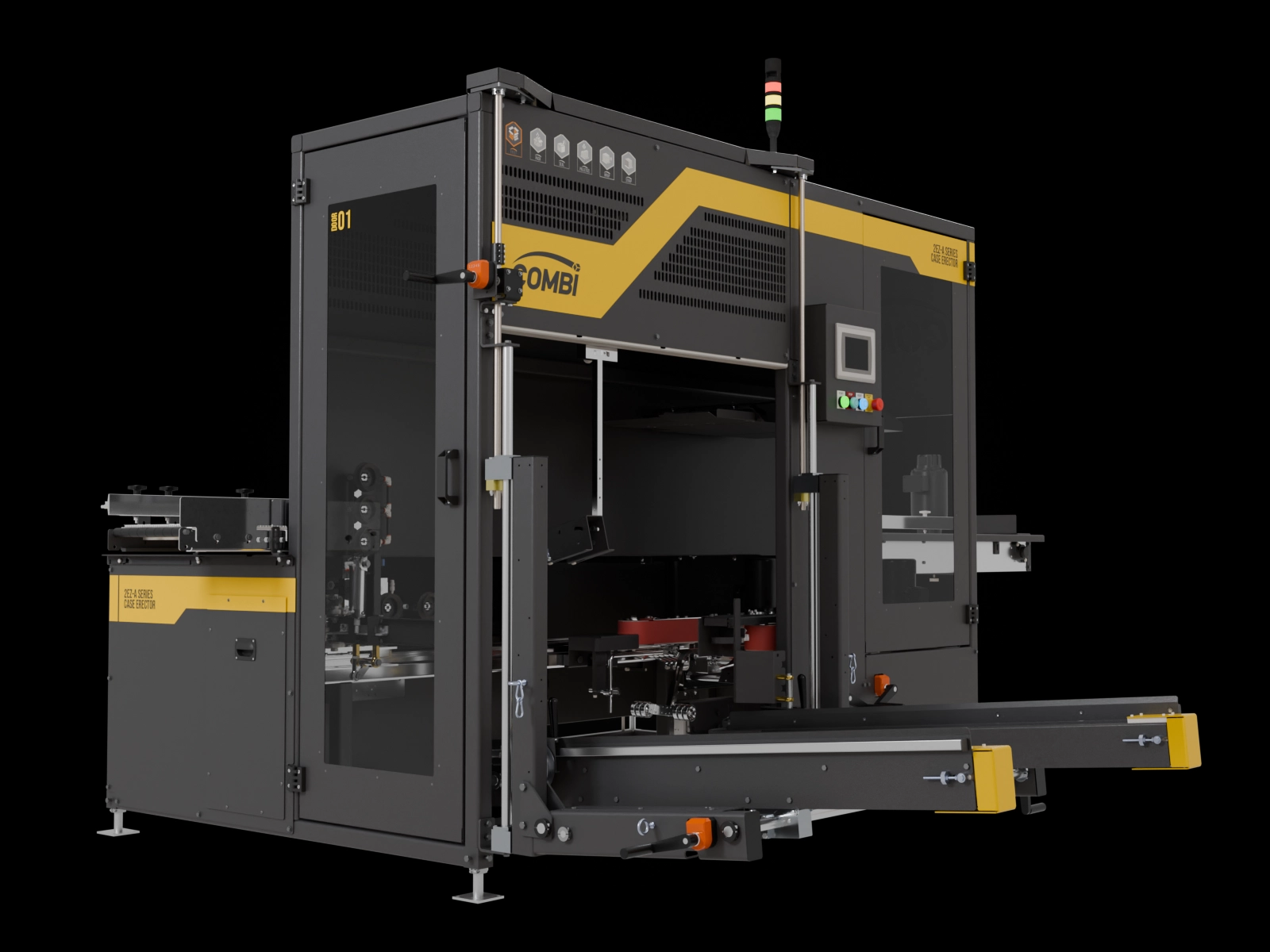
The core asset. The camera starts wide on the cell, follows one part from infeed to outfeed, then cuts to the details that differentiate you: the gripper, the vision step, the safety concept. Built from the cell CAD, so reach, joint limits and clearances are true. Read our guide to robot cell and automation system animation for how these are scoped.
2. X-ray clips of the components inside
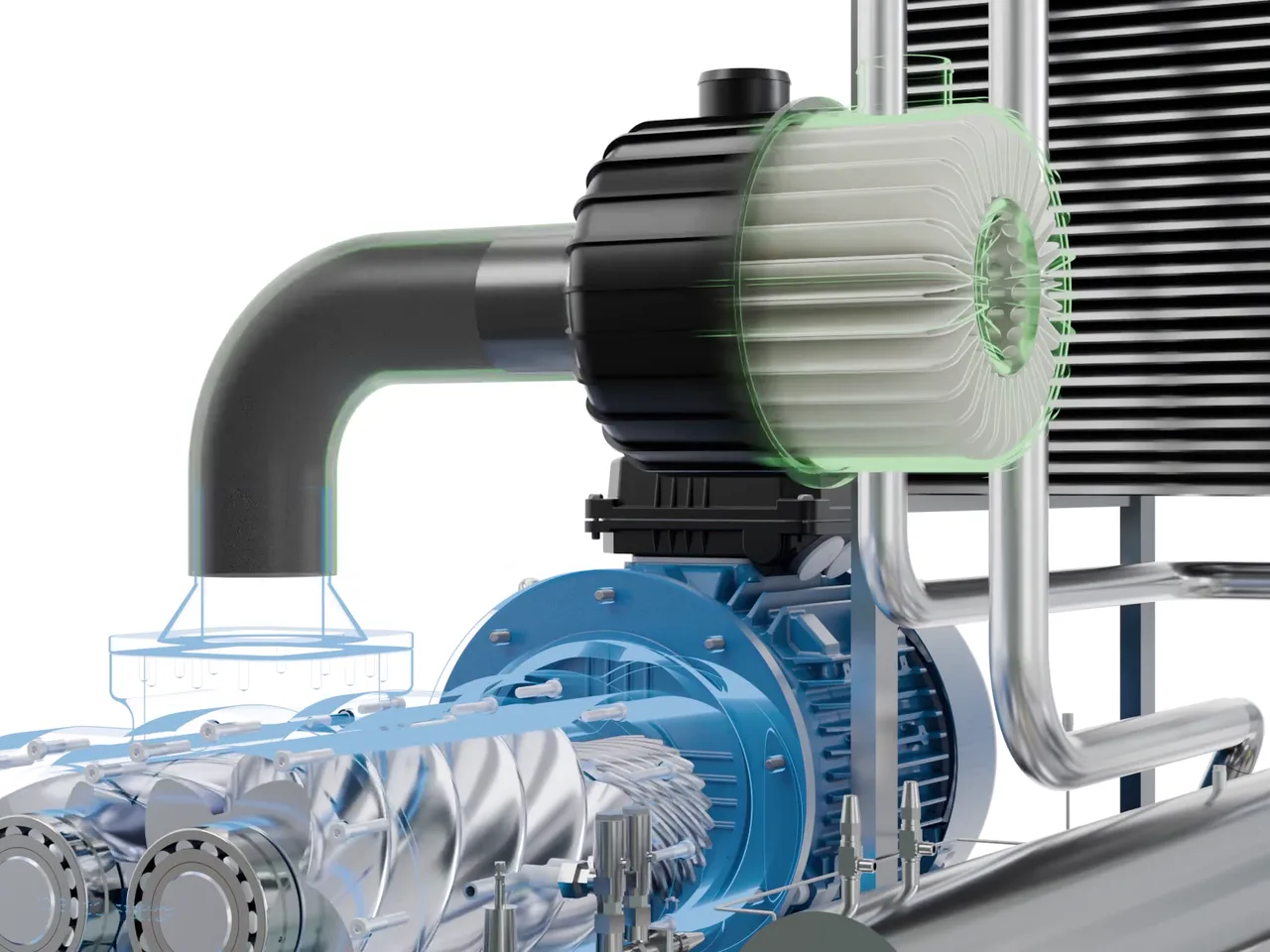
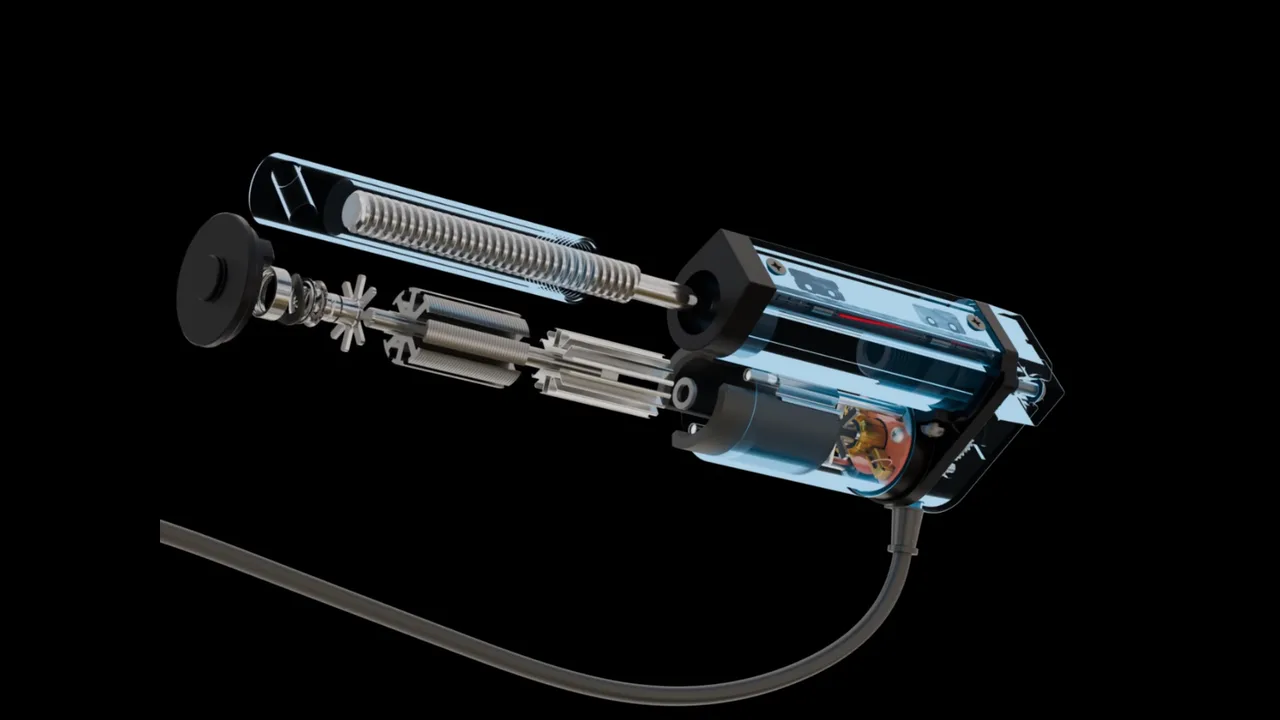
For drive, actuator and gearbox suppliers, a 15 to 30 second clip where the housing turns transparent and the internals move. It works without sound, which matters in the Las Vegas halls.
3. Layout flythroughs for integrators
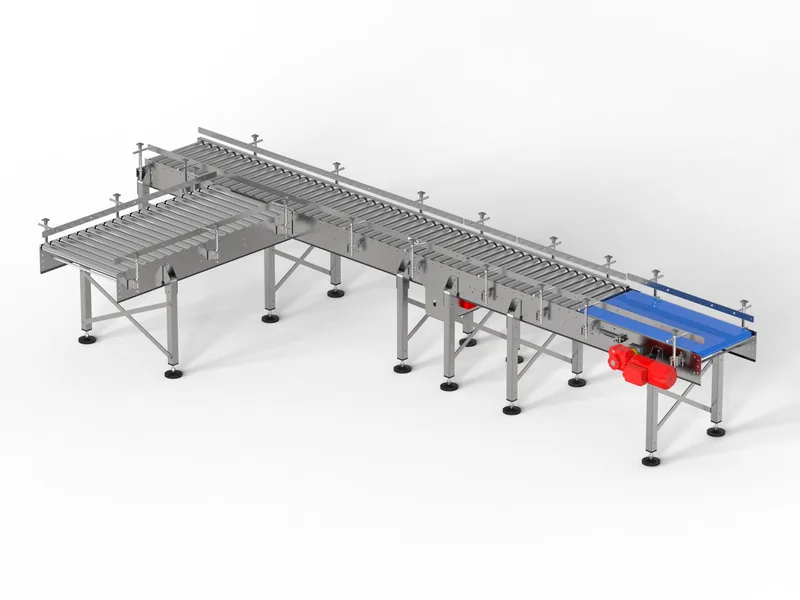
Integrators sell systems, not products. A flythrough of a complete automated area, palletising, picking or machine tending, shows scope and capability without exposing a client's confidential plant.
4. Interactive 3D on a touch screen
A visitor rotates the robot, opens the gripper, switches between payload variants. The same model then lives on your product page and in your sales team's tablets. See interactive 3D and configurators.
5. AR placement for large systems
For systems you cannot ship to Nevada, augmented reality puts the full-scale cell on the booth floor through a tablet. Our guide to AR at trade shows for machinery covers when it is worth it.
Mistakes we see on automation stands
- Robot footage with no product. An arm moving through empty space says nothing. Always show the part.
- Cycle times nobody can read. If the number matters, put it on screen large and hold it for three seconds.
- Stock robot models. Buyers notice when the robot is a generic model rather than the one you actually integrate. We build from your exact CAD and the robot maker's published models.
- One long film on the main screen. In a hall, people give you seconds. Loop short segments and keep the long version for the meeting room. See our seven rules for booth loop videos.
Timeline for Automate 2027
| Asset | Production time | Send CAD by |
|---|---|---|
| Cinematic launch film for a new robot or cell | 10 to 12 weeks | 1 February 2027 |
| Robot cell or process animation (45 to 120 s) | 8 to 10 weeks | 15 February 2027 |
| Interactive 3D viewer or AR model | 6 to 8 weeks | 1 March 2027 |
| Feature highlight film (20 to 45 s) | 2 to 4 weeks | 22 March 2027 |
| Renders for pre-show emails and press | 5 to 10 working days | 5 April 2027 |
| Booth wall prints from renders | 5 to 10 working days, plus print | 12 April 2027 |
Automate falls in the same week as LIGNA in Hanover, and only six weeks before automatica in Munich. If you exhibit on both sides of the Atlantic, one prepared model can serve all of them: brief both in January and re-cut the films per audience. Our automatica 2027 guide has the Munich dates.
Budget
Published industry guides put industrial animation at roughly $5,000 to $20,000 per finished minute. Our robot cell and process films start at $6,500 for 60 seconds, feature clips at $3,200, and the interactive viewer at $5,200. CAD preparation is included. Every further asset from a cell we have already prepared costs 20 to 40 per cent less, which is why most exhibitors brief one model for several shows.
What to send
- The cell or robot assembly as STEP, JT or native CAD, plus the robot maker's model if you integrate a third-party arm.
- A cycle description: part, sequence, cycle time and the one number you want visitors to remember.
- Your stand plan with screen sizes and resolutions.
- Brand guidelines and any claims legal has approved.
We sign an NDA before any file moves. Not sure what your CAD can become? Send one file and we will tell you within one working day, with a fixed price.
Written by Engr. Bilal Naseem, mechanical engineer (PEC Reg. No. 47883) and founder of 3DEnginuity. Questions about your own machine? Write to bilal.naseem@3denginuity.com.
Send one CAD file for a free assessment.
We open it, tell you what is usable, and return a fixed price and delivery date within one working day. NDA first if you need it.