- Dates
- 23 to 26 February 2027
- Venue
- Koelnmesse, Cologne
- Organiser
- Koelnmesse with DLG
- Previous edition
- March 2024
- 2024 edition
- 1,307 exhibitors, 38,427 visitors
- Visitors from
- 133 countries (2024)
Sources: Anuga FoodTec facts and figures, dates and opening hours.
Anuga FoodTec returns to Cologne from 23 to 26 February 2027, three years after the 2024 edition drew 1,307 exhibitors and 38,427 trade visitors from 133 countries. For food processing and packaging machine builders it is the one European fair where buyers from dairy, meat, bakery, confectionery, beverages and pet food walk the same halls in the same week.
That concentration is also the problem. A buyer from a frozen food plant will pass dozens of stands showing stainless steel cabinets that look alike from the aisle. What makes them stop is seeing what happens inside: the product flow, the hygienic design, the cleaning concept, the changeover. This guide covers what to show at Anuga FoodTec 2027, which visuals to prepare from your CAD, and the dates you need to hit.
Anuga FoodTec 2027 at a glance
The 2027 motto is Navigate Complexity, and the halls are grouped by theme: automation, digitalisation, processing, food packaging, intralogistics, safety and analytics, environment and energy, and a dedicated Pet Food Zone. Stand build-up runs from 15 to 22 February. By March 2026 the organiser reported two thirds of the space already booked, so most exhibitors now know their hall and neighbours.
What food industry buyers want to see
Food production buyers are engineers, plant managers and QA leads. They judge equipment on a short list of questions, and every one of them is about the inside of the machine:
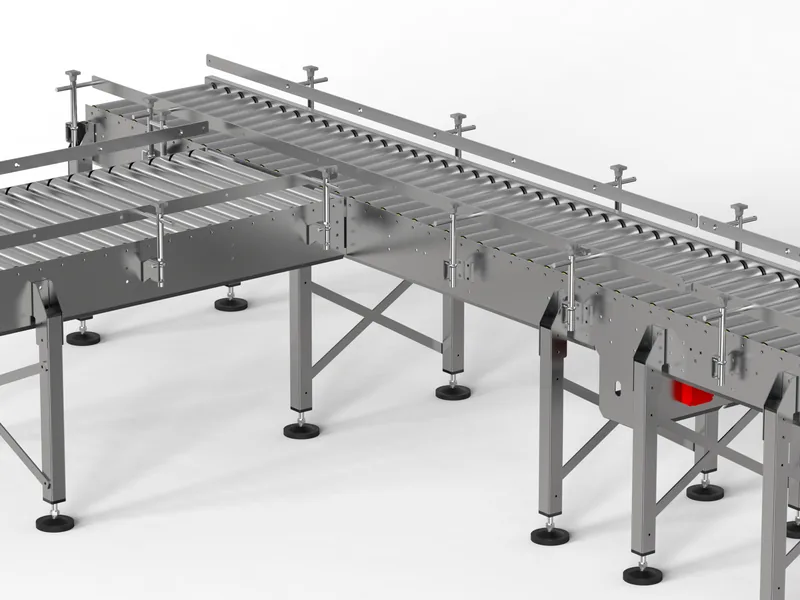
- Hygienic design. Where can product residue collect? Are surfaces sloped, are welds smooth, can every product contact part be reached? A cutaway or ghosted render answers this in seconds.
- Cleaning. How does CIP or wash-down reach every zone, and how long does it take? An animation of the cleaning cycle is often more persuasive than the production cycle.
- Product handling. How gently is the product treated, where are the transfer points, what is the throughput per hour?
- Changeover. How long does a format or recipe change take, and can operators do it without tools?
- Integration. How does the machine fit upstream and downstream, and how does it report to the MES?
None of these can be shown on a closed machine standing on carpet. That is the case for 3D visualization at a food technology fair: you can show the process with product in it, without shipping a 6 tonne line, filling it with real food and cleaning the stand every evening.
Which visuals to prepare from your CAD
1. A silent booth loop of 45 to 90 seconds
This is the single most valuable asset for a stand. It plays on a large screen or LED wall all day, so it has to work without sound, be readable from five metres, and loop without a visible jump. For food machinery the strongest structure is: product in, process steps with short labels, cleaning or changeover, product out. See how to design a booth loop for machinery.
2. A process film for sales meetings
A 90 to 120 second process animation with callouts, used on a tablet or meeting room screen when a serious buyer sits down. It explains the whole line in the order a process engineer thinks about it.
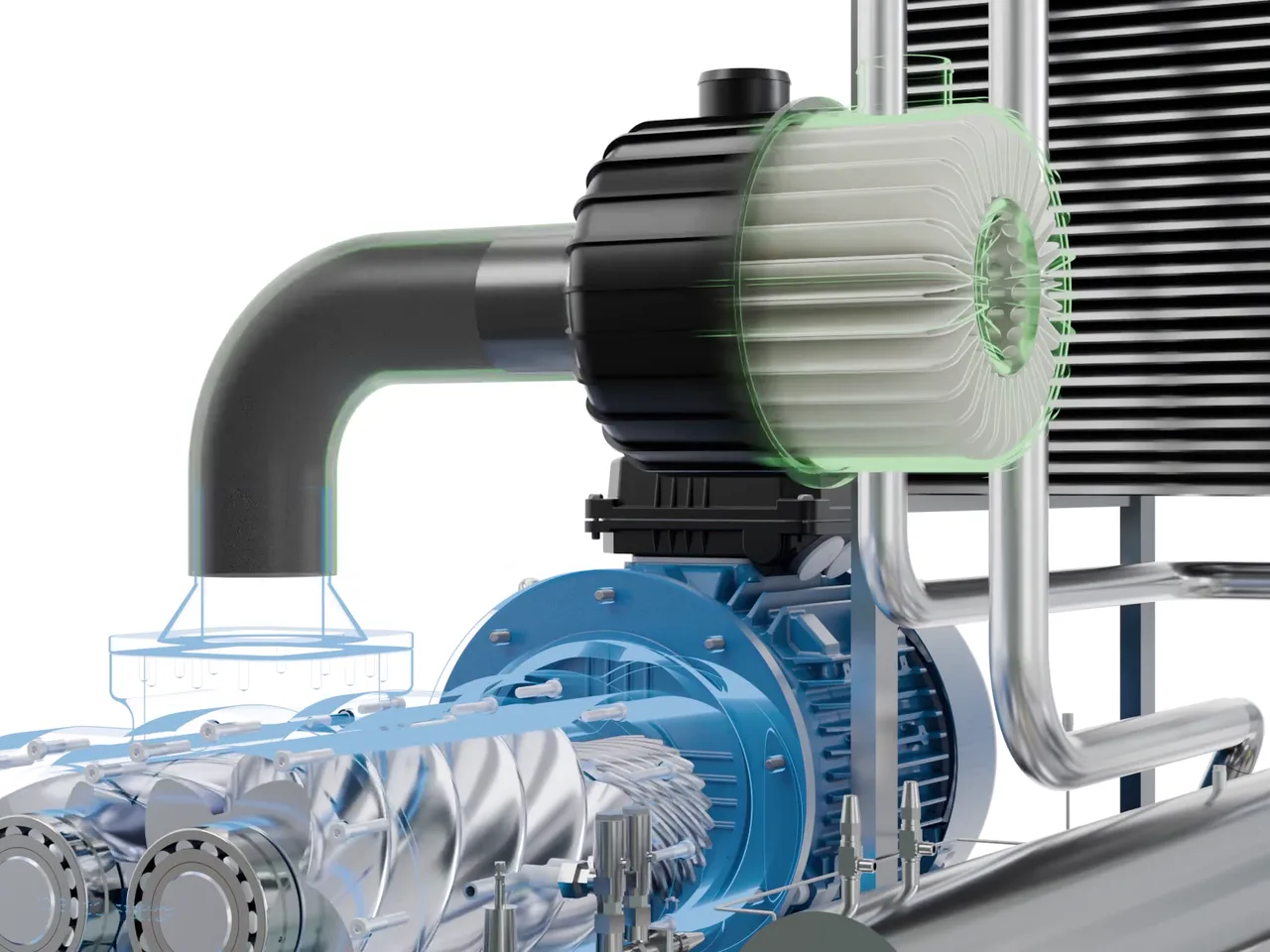
3. Hygienic design cutaways
Two or three cutaway or x-ray stills of the product zone, used on the booth wall, in the brochure and in pre-show emails. These are the images QA managers forward internally.
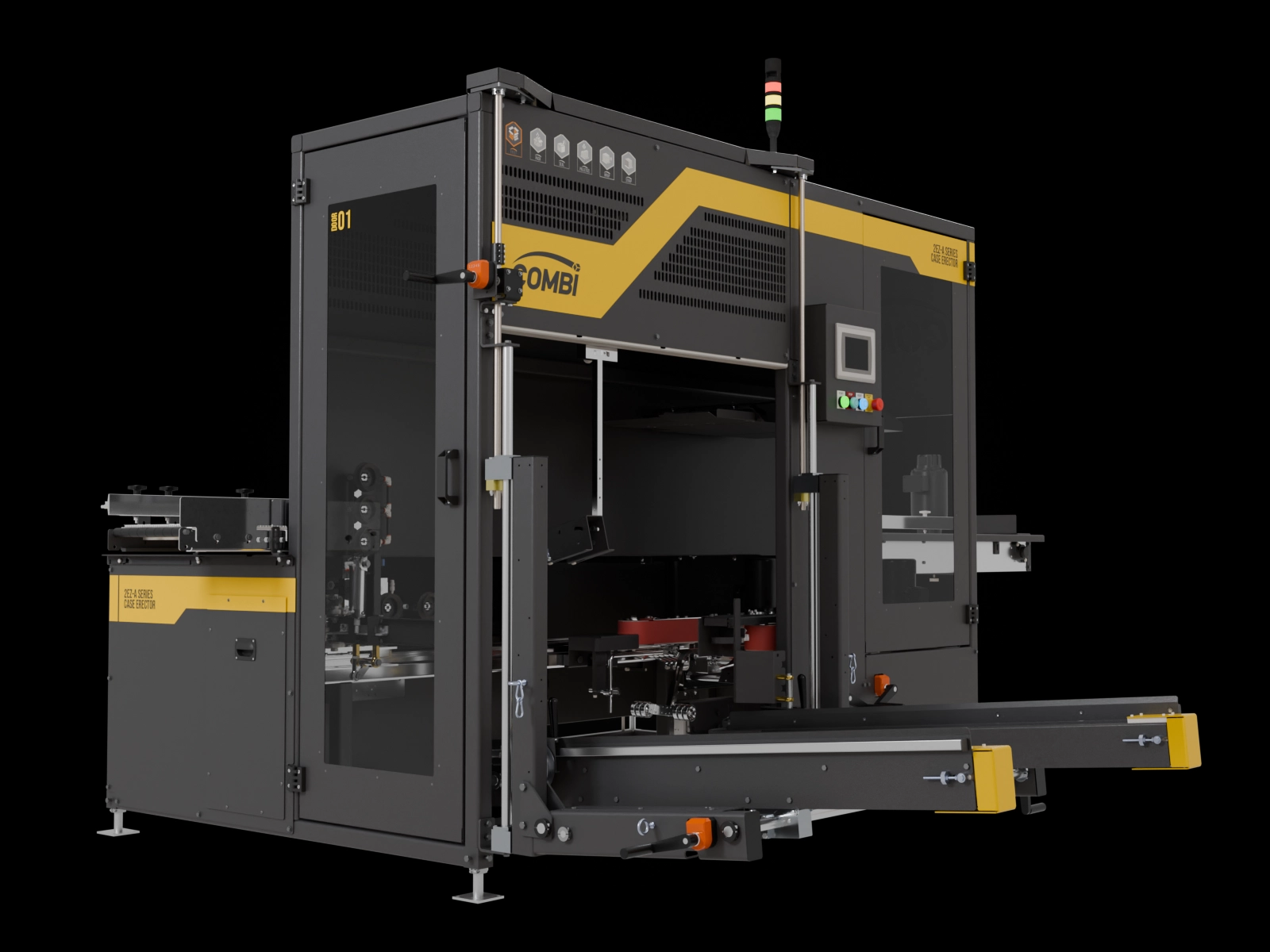
4. Renders for pre-show outreach
Photoreal stills for your exhibitor profile, the press kit, LinkedIn and the invitation emails your sales team sends in January. Fairs reward the exhibitors who fill their meeting calendar before the doors open.
Showing hygienic design without a wet stand
Hygiene is where food machinery is won or lost, and it is also the hardest thing to prove on a carpeted stand. Buyers who work to EHEDG guidelines or 3-A sanitary standards look for specific details: radiused internal corners, self-draining surfaces, no exposed threads in the product zone, open frames that can be hosed down, and seals that can be inspected without dismantling the machine.
A photoreal cutaway lets you point at each of those details. A short animation of the cleaning cycle, with spray patterns or CIP flow shown schematically, answers the question every QA manager asks: how long does sanitation take, and what does my team actually have to do? These are also the assets QA teams forward internally after the fair, which makes them more valuable than any brochure page.
Using the visuals after Cologne
The fair lasts four days. The visuals keep working for years if you plan them that way:
- Follow-up emails in the week after the fair, with the film link and the cutaway that matches the visitor's product.
- Customer plant meetings, where the process film replaces a long technical presentation.
- Distributors and agents in markets you do not visit yourself, who need the same story in their language.
- Your website, where a product page with a process film keeps visitors on the page far longer than a datasheet.
Production timeline for Anuga FoodTec 2027
The fair opens on 23 February 2027. Booth graphics usually have to be with the stand builder before build-up begins on 15 February, and pre-show campaigns should run from mid January. Working back from those dates:
| Asset | Production time | Send CAD by |
|---|---|---|
| Process or line film (60 to 120 s) | 8 to 10 weeks | 1 December 2026 |
| Cinematic launch film | 8 to 12 weeks | 17 November 2026 |
| Feature highlight film (20 to 45 s) | 2 to 4 weeks | 5 January 2027 |
| Booth wall prints from renders | 5 to 10 working days, plus print | 12 January 2027 |
| Renders for pre-show emails and press | 5 to 10 working days | 22 December 2026 |
If you are reading this in November or early December 2026, a full process film is still realistic. If it is already January, focus on renders and one short feature film on the mechanism that sells your machine.
Budget guide
| Package | Contents | Starting price |
|---|---|---|
| Essentials | 5 renders of one machine + 1 cutaway | From $3,790 |
| Stand ready | Renders + 30 to 45 s feature film as booth loop | From $6,800 |
| Full process story | Renders + 60 s line film + loop edit | From $10,800 |
| Launch | Cinematic film + process film + render set | From $25,000 |
Checklist before you brief a studio
- The CAD of the configuration you will show, as STEP or native files.
- The product (or products) the machine handles, with photos.
- Your three key selling points, ranked.
- Screen sizes and formats at the stand (16:9, portrait, LED wall pixel size).
- Languages: German and English cover most visitors; subtitles are cheaper than voice-over.
- Who approves, and by when. Most delays come from approval rounds, not production.
Send us the CAD and the stand plan and we return a fixed price and a schedule within one working day. Our food and beverage processing page shows how we approach hygienic design and process flow.
Written by Bilal Naseem, mechanical engineer and founder of 3DEnginuity. Questions about your own machine? Write to [email protected].
Send one CAD file for a free assessment.
We open it, tell you what is usable, and return a fixed price and delivery date within one working day. NDA first if you need it.