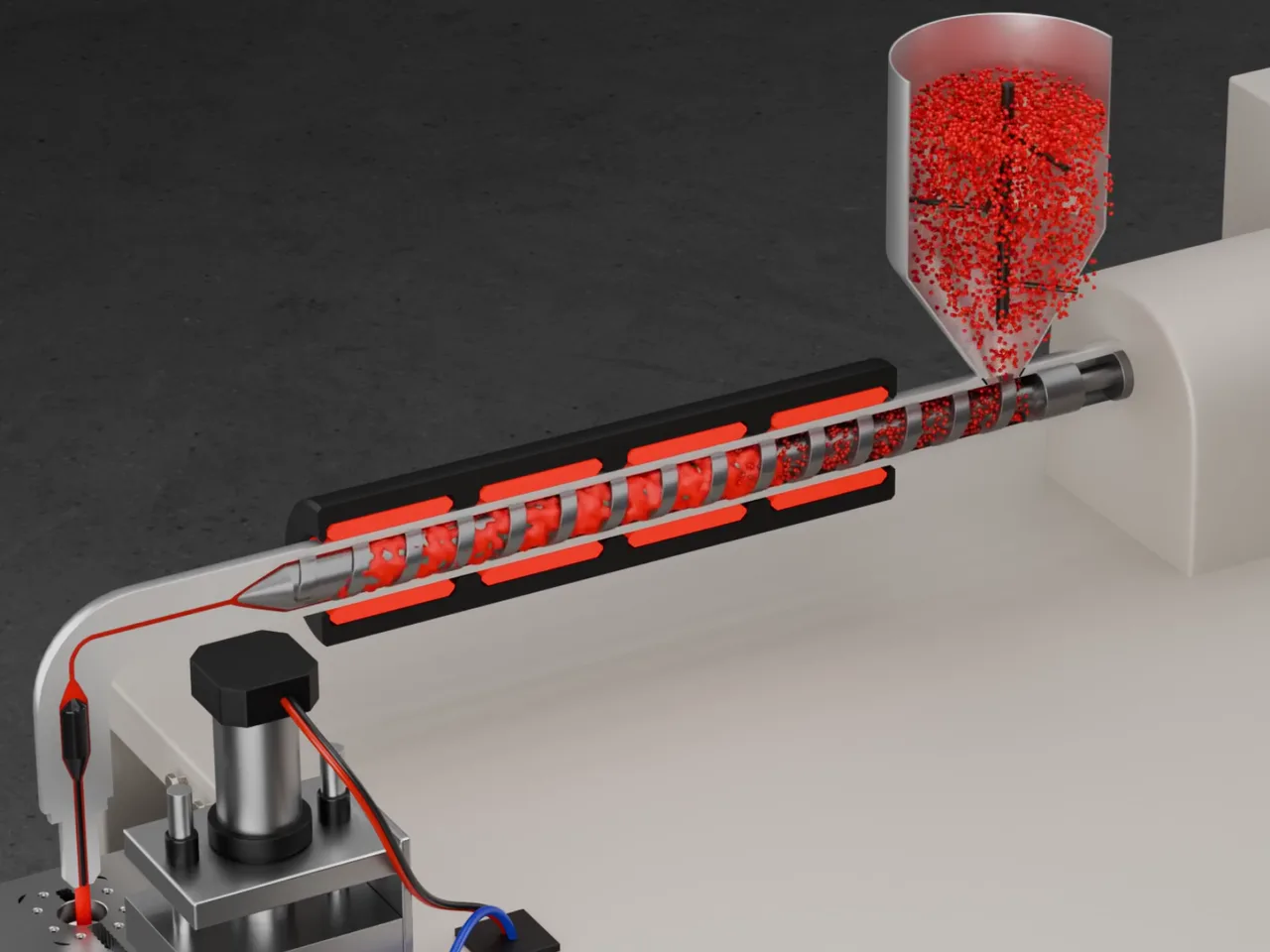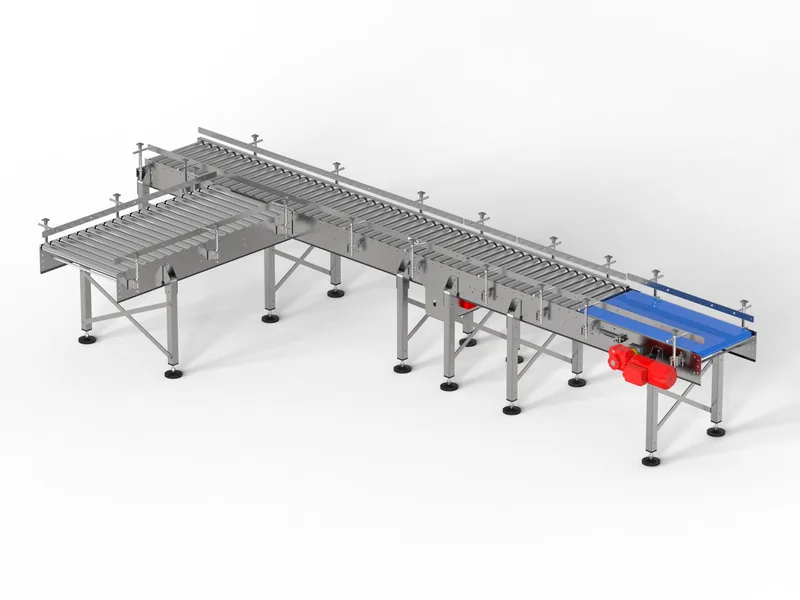
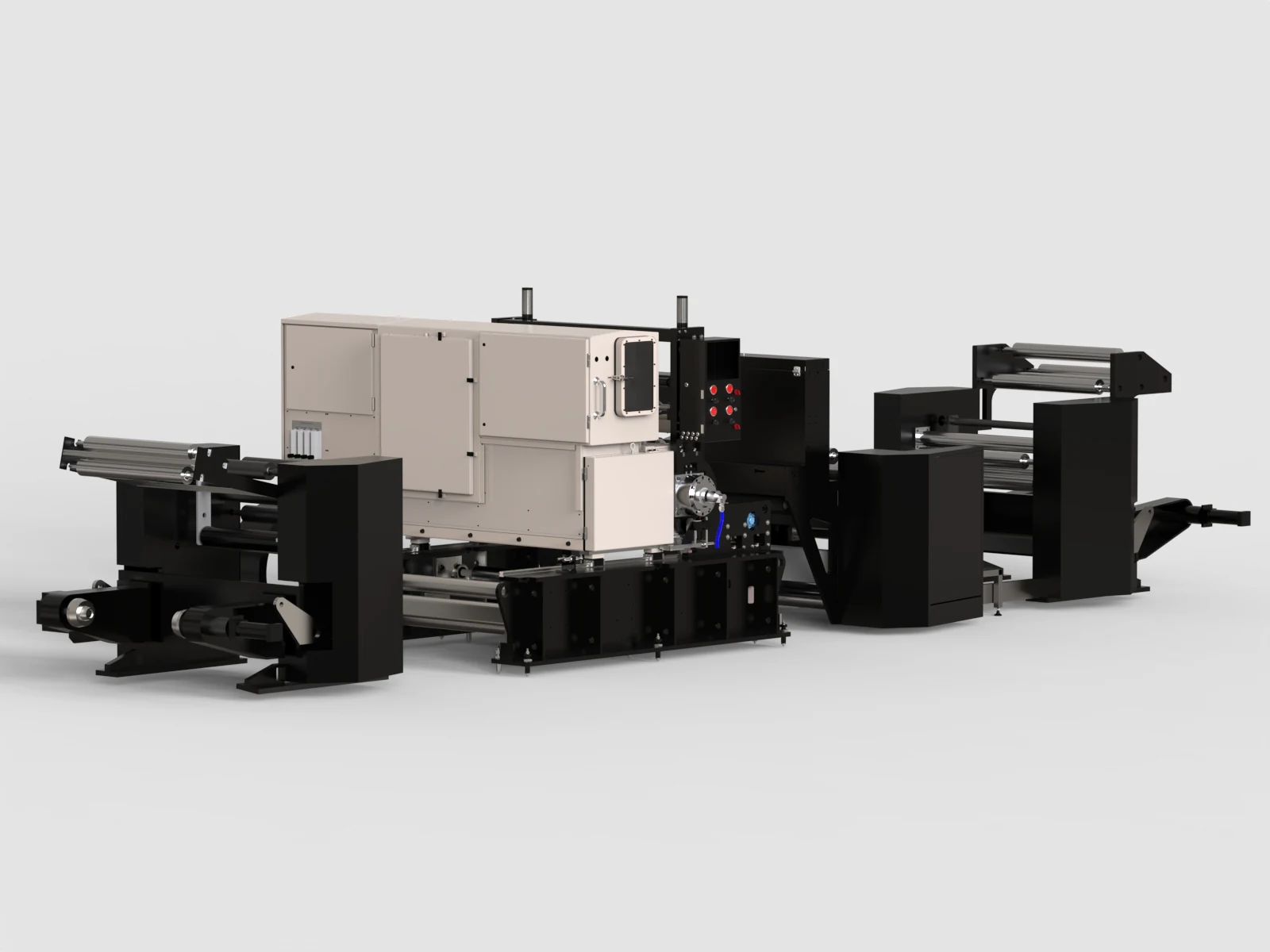
A production line is the hardest thing to sell from a brochure. It is too long to photograph in one frame, too fast to follow on video, and the important parts happen inside machines, under guarding or in closed vessels. A process animation shows the whole line, from raw material to finished product, in one continuous story that a buyer, an investor or a new operator can follow.
This guide explains how production line and process animations are planned and built from engineering data, what they cost and how manufacturers use them beyond the trade fair.
What a process animation is
A process animation is a 60 to 180 second 3D film that follows the product through a machine or line in the order it is processed. The camera moves along the line, guarding is removed or ghosted, and each station is explained with a short caption or callout. Unlike a promotional film, accuracy comes first: the sequence, the product flow and the cycle times should match the real process.
Where manufacturers use them
- Sales meetings, to explain a line before the customer visits a reference plant.
- Trade fairs, as the main stand film or cut into a silent booth loop.
- Proposals and tenders, where a customer-specific layout animation shows exactly what they will receive.
- Factory acceptance and commissioning, so the customer's team understands the sequence before the line arrives.
- Training of operators and service technicians.
- Investors and management, when a new plant or line is being approved.
How a process animation is planned
- Inputs. CAD of the machines or the line layout, a process description or P&ID, and cycle times or throughput figures.
- Script. A short list of stations in order, with the one message for each. This is where engineering and marketing agree on what matters.
- Storyboard or animatic. A rough version with simple shading and real timing. You approve the camera path and sequence before anything is rendered in full quality.
- Look frame. One final quality still to approve materials, lighting and caption style.
- Production. Rigging of every moving part, product animation, rendering, captions and edit.
- Versions. Language versions, a silent loop, and social cutdowns from the same footage.
Approving the animatic before full production is the step that protects your budget. Changes at storyboard stage are cheap. Changes after rendering are not. If you are unsure whether you need a process animation or an explainer video, read process animation vs explainer video.
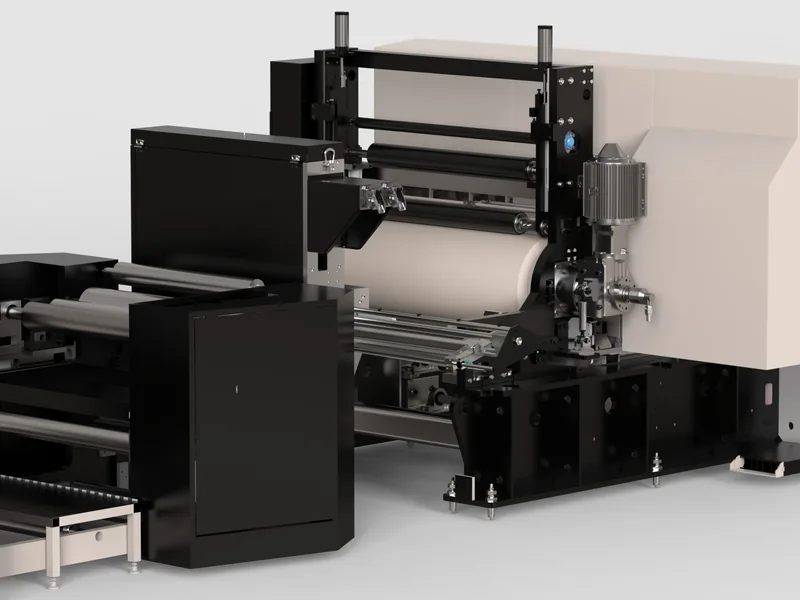
Accuracy: what to insist on
- Real cycle times. If the line runs at 60 cycles per minute, the film should look like 60 cycles per minute, even if parts of it are shown in slow motion with a label saying so.
- Correct sequence. Valves, actuators and transfers should move in the order the PLC moves them.
- Honest product behaviour. We animate rigid-body motion, mechanisms and product flow clearly. Complex fluid or particle physics, such as spray drying, is shown schematically rather than simulated.
Process animation or real footage?
Real footage of a running line is credible and relatively cheap if a reference plant exists and allows filming. It cannot show what happens inside closed machines, it cannot show a line that has not been built, and it shows one customer's configuration. Process animation shows the inside, works before the line exists, and can be adapted for each customer. Many manufacturers combine the two: a short sequence of real footage to establish credibility, then animation to explain how it works.
How long should it be?
Long enough to cover every station once, and no longer. For a single machine, 60 seconds is usually right. For a full line, 90 to 120 seconds. If the process needs more, split it: a main film for the overview and short station clips of 15 to 30 seconds for detail. Short clips are also easier to use on websites, in emails and at trade fairs.
What it costs
| Film | Scope | Price |
|---|---|---|
| Line or process film | 60 seconds, one line or process, callouts | From $7,900 |
| Process film | 90 to 120 seconds, several stations and views | From $12,900 |
| Customer-specific layout version | Reuses prepared modules | Quoted per project |
For machine builders who sell configured lines, the economics improve with each project. Standard modules are prepared once, and each new customer layout reuses them.
What to send for a quote
- The line layout and the machine CAD, as STEP or native.
- A process description: stations in order, with cycle times.
- The audience and use: sales, fair, training or tender.
- Required languages and formats.
We reply within one working day with a fixed quote. See our process and line animation service for examples.
Written by Bilal Naseem, mechanical engineer and founder of 3DEnginuity. Questions about your own machine? Write to [email protected].
Send one CAD file for a free assessment.
We open it, tell you what is usable, and return a fixed price and delivery date within one working day. NDA first if you need it.