The phrase covers two very different things, and buyers waste months talking past each other because of it.
Two kinds of twin
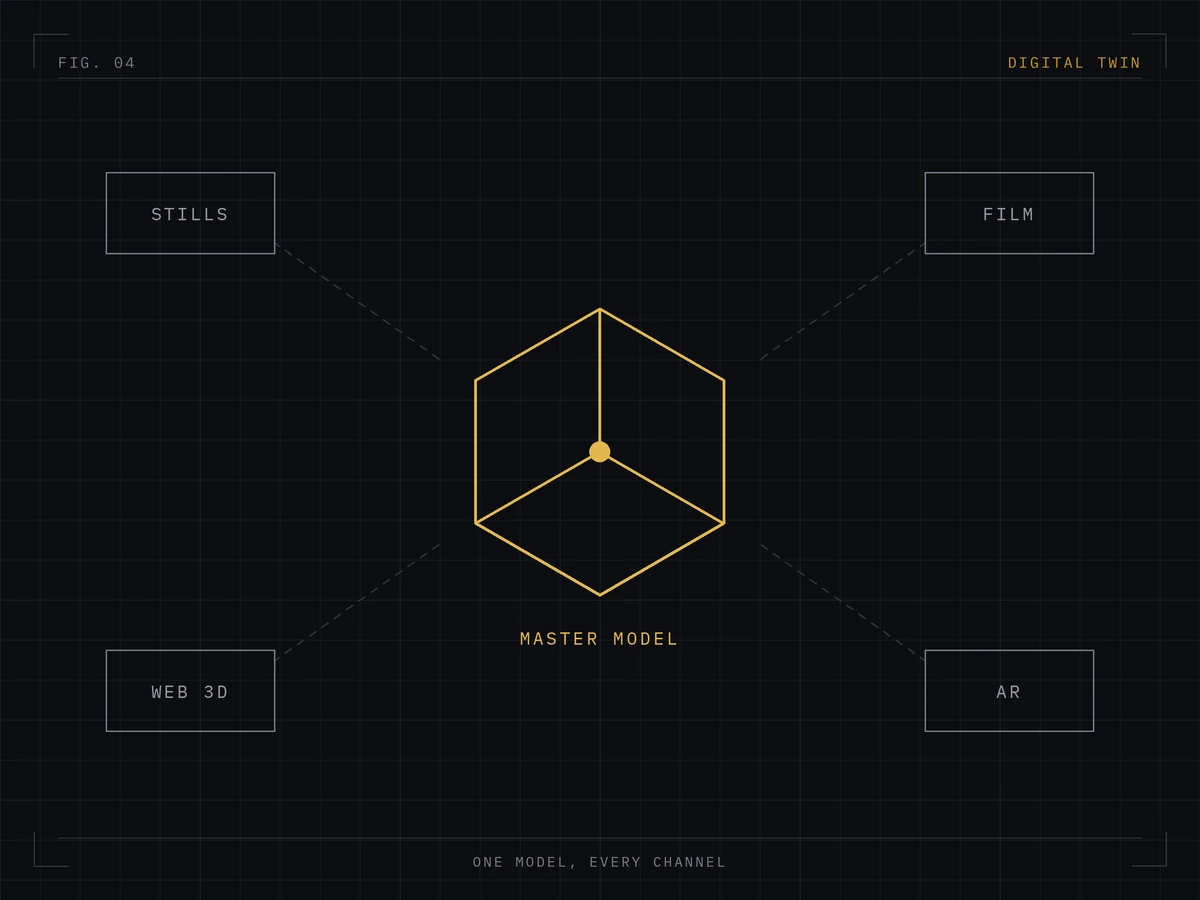
A simulation twin is connected to live machine data and used for engineering, monitoring and predictive maintenance. A visual twin is a photoreal, accurate 3D replica of the machine, used for marketing, sales, training and documentation. We build the second, and it is the one most manufacturers actually need first.
What a visual twin includes
- An optimised, accurate model of the machine, built from your CAD
- Materials and finishes that match the real unit
- Configurations, options and colourways
- Web and AR versions light enough to load on a phone
- A reusable master file that every later asset comes from
What it costs
Preparing one machine starts at $490 as a standalone project. Most clients bundle it into a first render or animation, and everything afterwards reuses it. See CAD to marketing assets and pricing.
What you can do once it exists
- Produce catalogue renders of every configuration without a photo shoot
- Animate the process or a single feature
- Put an interactive viewer on your product page
- Place the machine at full scale on a customer floor in AR
- Train operators in VR before the machine is commissioned
Why it saves money over time
Most manufacturers pay to model the same machine several times: once for a brochure render, again for a video agency, again for a configurator. A visual twin is paid for once. Repeat projects on a prepared machine typically cost 20 to 40 per cent less.
Where to start
One machine, usually the flagship. Prepare it, produce a render set and one feature film, and you will have the assets to judge whether the rest of the range is worth doing. Send a CAD file for a free assessment.
Send one CAD file for a free assessment.
We open it, tell you what is usable, and return a fixed price and delivery date within one working day. NDA first if you need it.